The art of tempering chocolate: How to make perfect Valentine’s chocolates?
Hello culinary enthusiasts!
Today, with great joy, I would like to share with you one of my favorite culinary secrets – the art of tempering chocolate. What is it? It’s nothing more than a process of controlled cooling and heating of chocolate, giving it not only a shiny appearance but also a delicate consistency that melts perfectly in the mouth. But why bother doing it at all? Well, tempering is not just about aesthetics – it’s also a guarantee of the chocolate’s durability and prevention of rapid melting in your hands. And why is it important now? Because Valentine’s Day is approaching, and making your own homemade chocolates is truly a brilliant way to create a unique gift for your loved one.
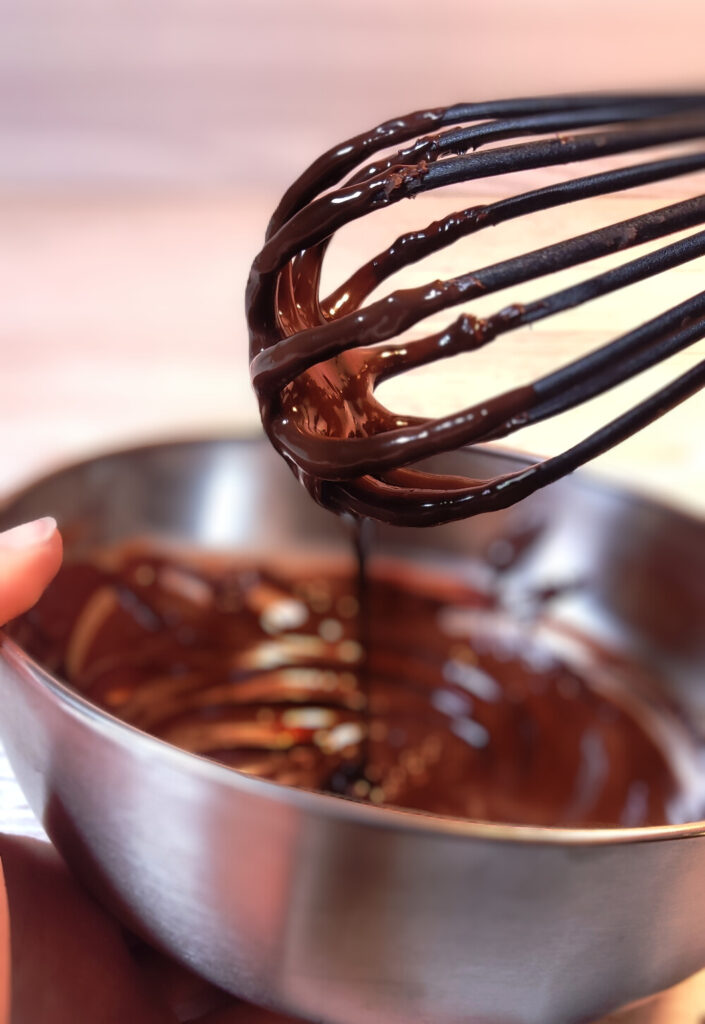
Tempering chocolate is not just a culinary art but also a crucial process that transforms our chocolate into a perfectly smooth, shiny, and uniformly colored delicacy. In today’s post, we will shed light on this fascinating process, learning about the key steps of tempering and the essential temperatures for different types of chocolate.
Chocolate rituals: Tempering for perfection
Tempering process: Heating, cooling, reheating
Tempering chocolate is not a one-time heating affair. It’s a process that involves careful heating, gentle cooling, and then controlled reheating of the chocolate. This rigorous process ensures that our chocolate is durable, smooth, and glossy.
Tempering Temperatures for Different Chocolates
DARK CHOCOLATE
- Melt it at a temperature of 45-50°C
- Cool it to 27-28°C
- Then reheat it to 31-32°C.
MILK CHOCOLATE
- Heat it to 40-45°C
- Cool it to 26-28°C
- Then reheat it to 29-30°C.
WHITE CHOCOLATE
- Melt it at 40-45°C
- Cool it to 26-27°C
- Then reheat it to 29-30°C.
Advanced pastry work requires tempering
If we aim to achieve an impressive, smooth, and shiny chocolate layer or create an elegant decoration, tempering is necessary. This process provides controlled crystallization of cocoa butter, influencing the stability, smoothness, and shine of tempered chocolate.
Key principles of chocolate tempering
Tempering can be done in various ways, but three elements are crucial: temperature, time, and motion. Properly adjusting the temperature at each stage, patience, and continuous stirring are key factors for success.
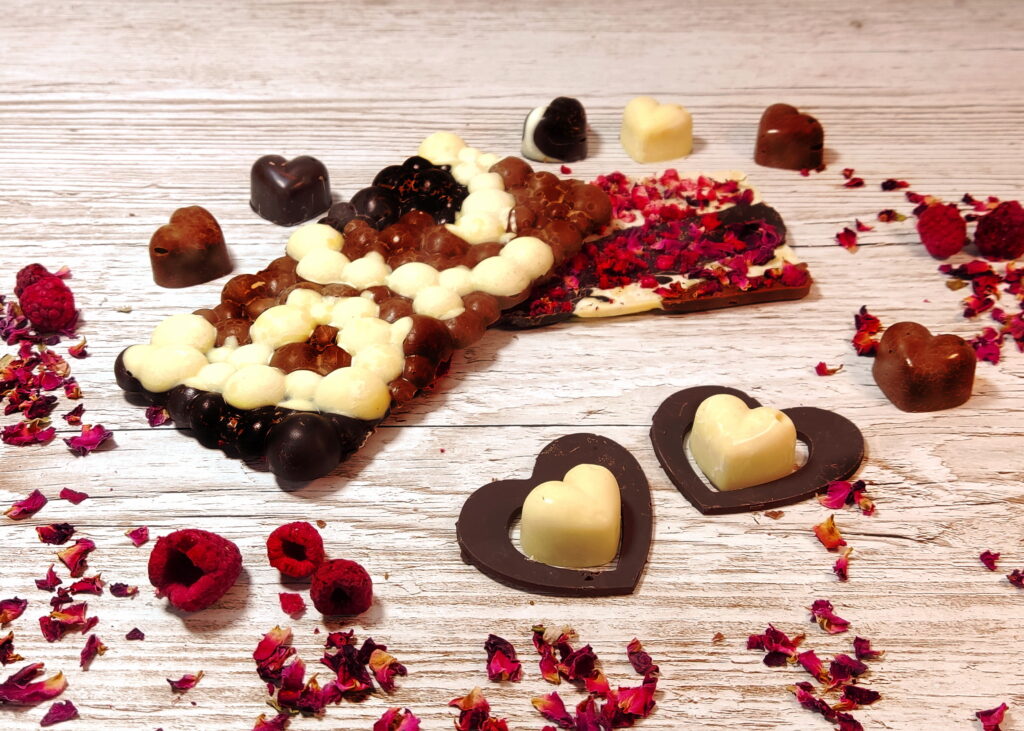
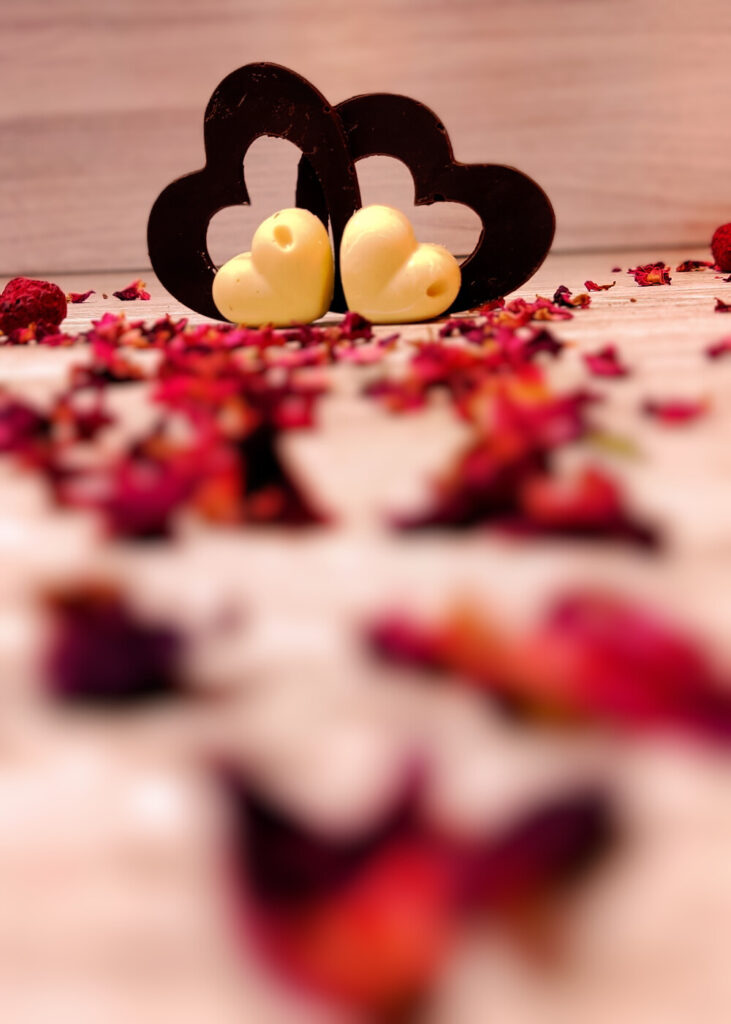
To still-molten chocolate, you can add enhancements that will accentuate its flavor and give it a unique character. For example, dried edible rose petals will beautifully complement the romantic ambiance of Valentine’s Day, imparting a delicate aroma to the sweetness. Freeze-dried fruits, such as strawberries, raspberries, or dried mango, will provide intense flavors and vibrant colors. The addition of coconut lends an exotic twist, while nuts enrich the texture, creating extraordinary taste experiences. Creativity in chocolate additions knows no bounds, so feel free to experiment boldly!
Temperowanie czekolady to sztuka, której opanowanie pozwala nam cieszyć się idealnym smakiem i wyglądem naszych słodyczy. Przy odpowiednich temperaturach, czasie i mieszaniu możemy stworzyć czekoladowe dzieła sztuki, idealne na różne okazje. Teraz, z pewnością, poczujesz się gotowy na podjęcie się tego kulinarnego wyzwania!
Check out also…